
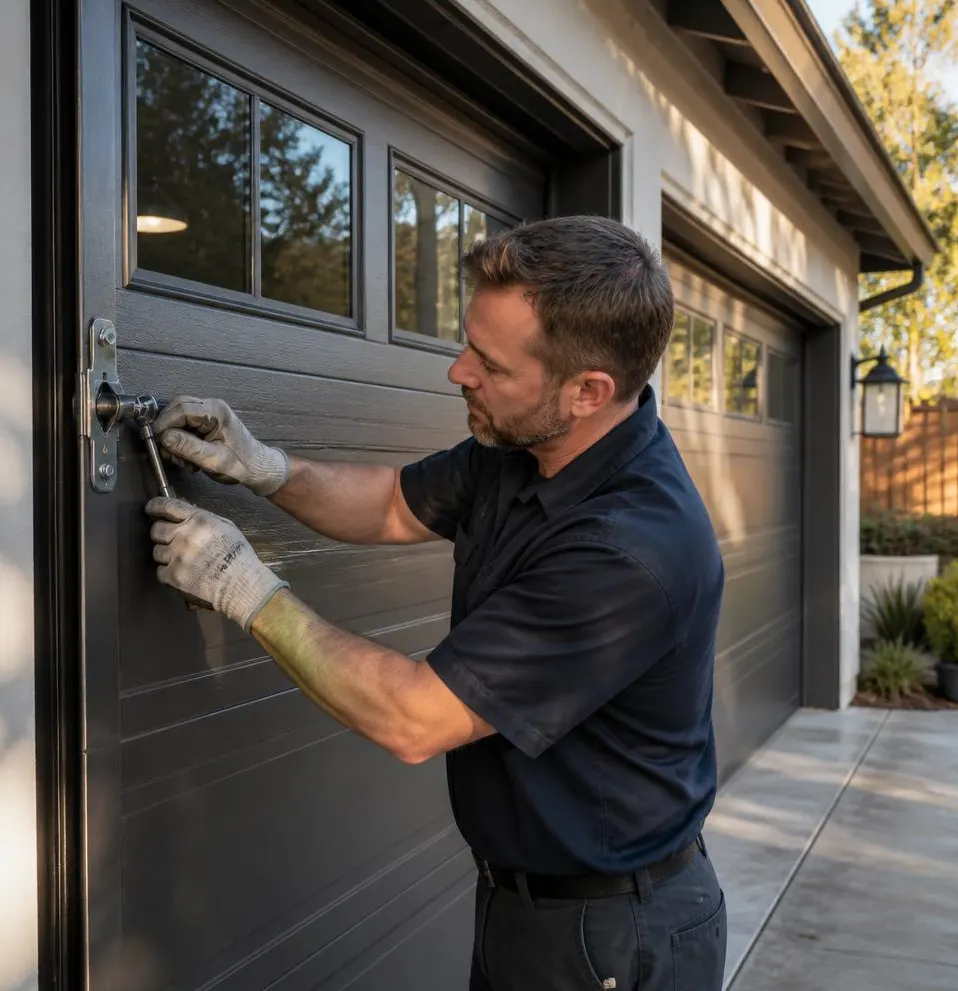
Winterizing Your Garage Door Before Rochelle, IL's First Hard Freeze
The short answer: before the first hard freeze hits, check your weatherstripping, test the door's balance, lubricate the moving parts, inspect the springs, and make sure your opener has a working battery backup. Garage doors take a real beating once ice, road salt, and single-digit nights settle in across Ogle County, and a door that's been coasting all summer usually has a few weak spots that only show up once the cold arrives.
Start with the weatherstripping and bottom seal
The rubber seal along the bottom of the door and the strips around the sides and top are your first defense against wind-driven snow and cold air. After a humid summer, that rubber can crack, flatten, or pull away from the track. Run your hand along the bottom seal — if it's stiff, torn, or doesn't sit flush against the concrete, cold air and meltwater will find their way in. Replacement seal is inexpensive and a reasonable DIY swap, but make sure you get the right profile for your door's track; a loose-fitting seal won't do much once the wind picks up.
Test the balance before the springs are under more strain
Cold weather makes steel springs more brittle and more likely to snap, especially if they're already near the end of their lifespan. Disconnect the opener by pulling the release cord, then lift the door halfway by hand. A properly balanced door will stay put; if it slams down or shoots up, the springs are compensating poorly and are under more stress than they should be. That extra strain, combined with contraction from cold temperatures, is exactly how a spring fails on a January morning. Torsion springs typically last several years but have a finite number of cycles — if yours is older or the door feels heavy, have it inspected before winter rather than after it breaks.
Lubricate rollers, hinges, and the track
Cold thickens old grease and dries out anything that's already past its prime, which is a big reason garage doors start grinding and squealing in winter. Use a silicone-based or lithium-based garage door lubricant (not WD-40, which is a solvent, not a lubricant) on the rollers, hinges, and torsion spring. Avoid heavy grease on the track itself — a light film is enough, and too much will just collect grit and salt residue that tracks in on tires and boots all winter.
Deal with ice and salt before they deal with your door
Rochelle winters bring ice buildup at the base of the door and salt residue that gets kicked up from driveways and tracked in by vehicles. That salt is corrosive to the bottom bracket, tracks, and any exposed hardware. A few habits help: knock ice off the bottom seal before it bonds the door to the slab, hose down the bottom few feet of track periodically on warmer days to rinse off salt film, and wipe down exposed metal hardware if you notice white corrosion starting to form. If ice regularly builds up right where the door meets the floor, a heated threshold seal or simply improving drainage near the garage entrance can save you from a door that's frozen shut some mornings.
Check the opener and its backup power
Power outages are more common in winter storms, and a garage door opener without battery backup means you're stuck manually releasing the door in the cold if the power goes out. If your opener is more than a few years old, check whether the battery backup (if it has one) still holds a charge — many fail quietly and you don't find out until you need them. This is also a good time to replace opener remote batteries and test the keypad, since cold weather is brutal on battery life across the board.
Look at insulation if your garage connects to living space
Homes in this area see big swings between humid summers and cold, windy winters, and an uninsulated garage door lets a lot of that cold transfer into an attached garage — and sometimes into the house itself if there's a shared wall. If your garage feels noticeably colder than it should, or pipes near the garage have frozen in past winters, an insulated door panel or a retrofit insulation kit can make a real difference in comfort and energy use, not just door performance.
Walk the perimeter one more time
Before the first snow, take five minutes to walk around the door from outside. Look for gaps at the corners, daylight showing through the sides, or a bottom seal that's pulled away from the slab. These small gaps let in cold air, moisture, and eventually ice, and they're far easier to fix in October than during a January cold snap.
When to Call Rochelle Garage Door
If your door is off balance, a spring looks stretched or worn, or the opener's backup battery won't hold a charge, it's worth having it looked at before the cold sets in rather than after something fails. Our Spring Replacement service addresses the single most common cold-weather failure point, and our Garage Door Maintenance visits cover balance testing, lubrication, hardware inspection, and seal checks in one trip — the kind of once-a-year tune-up that catches small issues before they turn into a door that won't open on the coldest morning of the year. We also handle opener repair and installation if your backup battery or remote system needs attention before winter.
If you're searching for a garage door company near Rochelle IL, or you need a garage door technician near 61068 before the ice sets in, give Rochelle Garage Door a call. We serve Rochelle and the surrounding Ogle County communities, and we'd rather help you get ahead of a problem now than respond to an emergency call in a snowstorm.